
Doubtless Bay, located in New Zealand’s Far North, is a region of profound historical significance, often cited as the starting point of Aotearoa’s human story. Its history spans from the earliest Polynesian arrivals to a 19th-century industrial boom and its modern identity as a popular coastal retreat.
Early Māori Settlement
- Arrival of Kupe: According to tradition, the legendary Polynesian explorer Kupe made one of the first human landings in New Zealand at Taipa around 900 AD. A monument at Taipa commemorates this event. [1]
- Ngāti Kahu: The bay is the ancestral home of the Ngāti Kahu iwi. Ancient pā sites (fortified villages), such as Rangikapiti Pā, still overlook the bay today. [2]
- Naming of Mangōnui: The town and harbour of Mangōnui (meaning “large shark”) were named after a guardian shark that, according to legend, guided the ancestral canoe Ruakaramea into the harbour. [1]
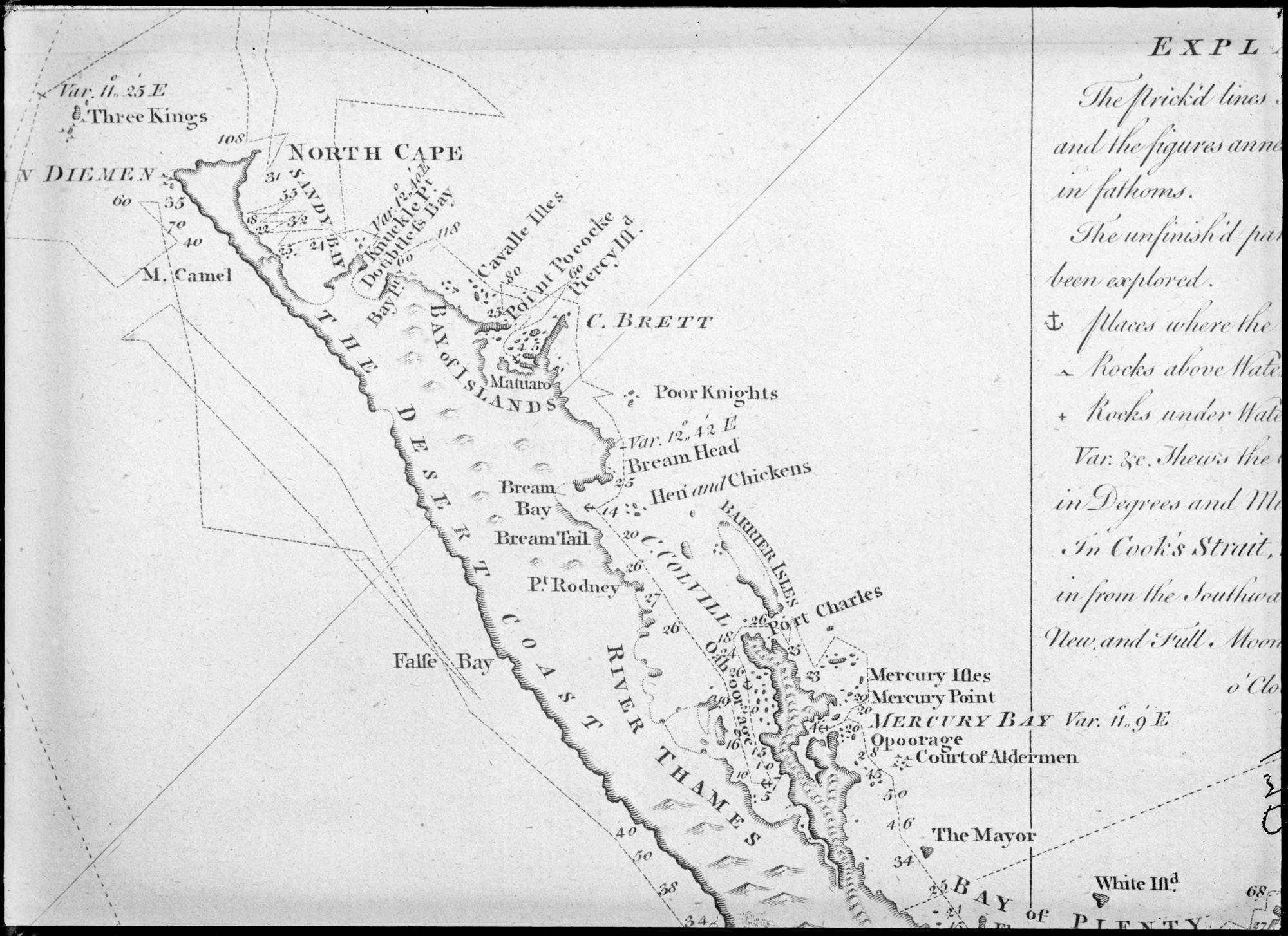
Map of the northern part of New Zealand from the Coromandel Peninsula to North Cape, from Captain Cook’s chart of New Zealand. Source: Auckland Libraries Heritage Collections 4-00170
European Exploration (1769)
In December 1769, two European explorers visited the bay within days of each other, unaware of the other’s presence:
- Captain James Cook: Sailing past the entrance, Cook recorded in his journal that it was “doubtless a bay“, giving it its permanent English name – Doubtless Bay. [3] Click here to read the journal entry. [4]
- Jean-François-Marie de Surville: The French navigator anchored in the bay for two weeks, naming it Baye de Lauriston. During this stay, his chaplain performed the first Christian service on New Zealand soil. However, the visit ended in conflict when de Surville burned a Māori village and kidnapped a local chief, Ranginui, in retaliation for a lost boat. [5] [6]
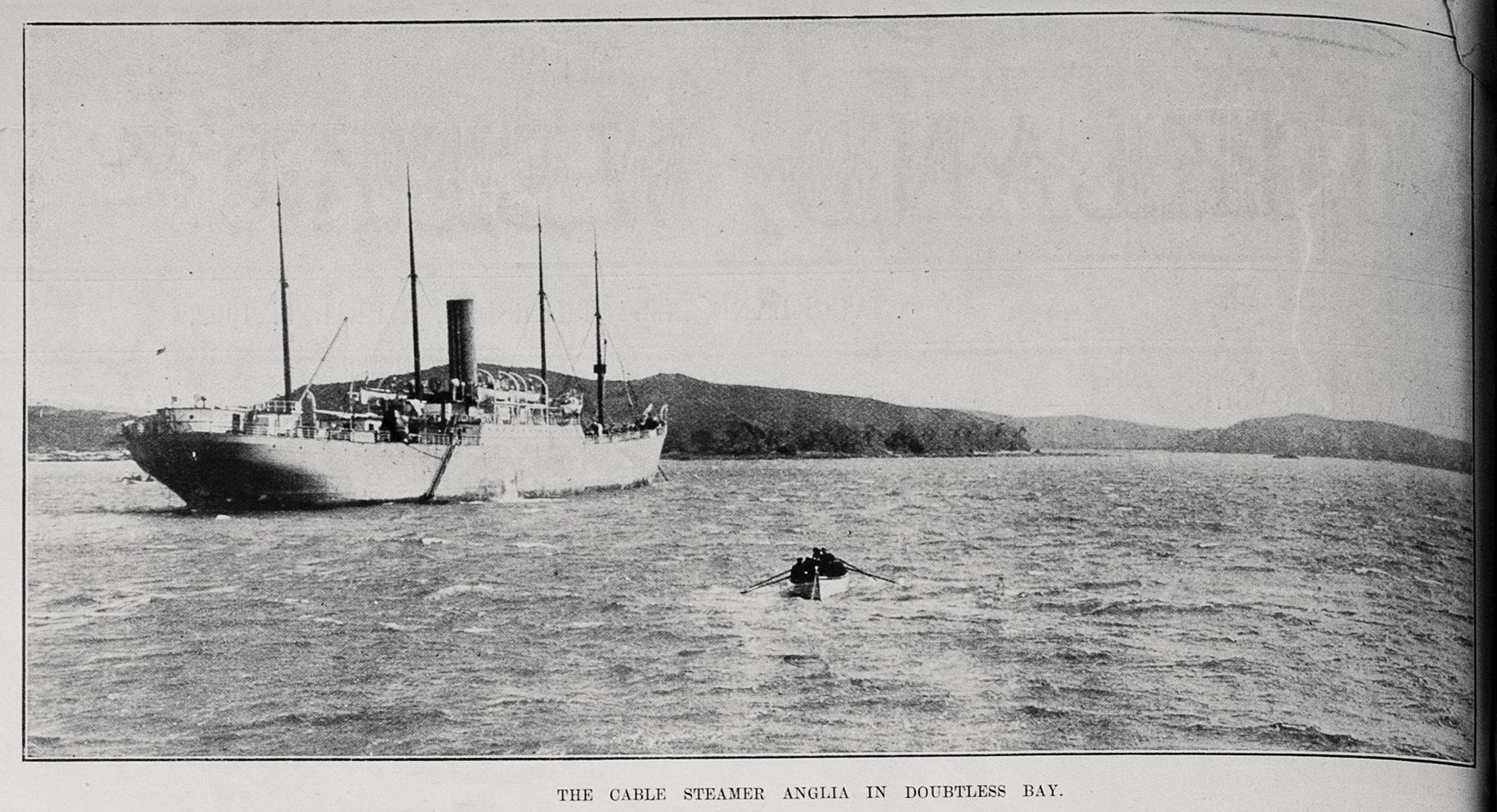
The cable steamer ‘Anglia’ in Doubtless Bay, Northland. Source: Auckland Libraries Heritage Collections AWNS-19020403-02-01
19th-Century Industrial Boom
By the mid-1800s, Doubtless Bay had become a bustling hub for international trade:
- Whaling: Mangōnui served as a major port for whaling ships from 1792 onwards. You can still visit the Butler Point Whaling Museum, which includes the 1847 homestead of Captain William Butler. [7]
- Timber and Gum: The region flourished through the Kauri timber trade and kauri gum extraction. Thousands of “gum diggers,” many from Croatia, worked the fields, later becoming foundational to the New Zealand wine industry. [1]
- Global Connection: In 1902, the Pacific Cable Station was established in Doubtless Bay and was a terminus of a telegraph cable running between New Zealand and British Columbia as part of the All Red Line. [7]
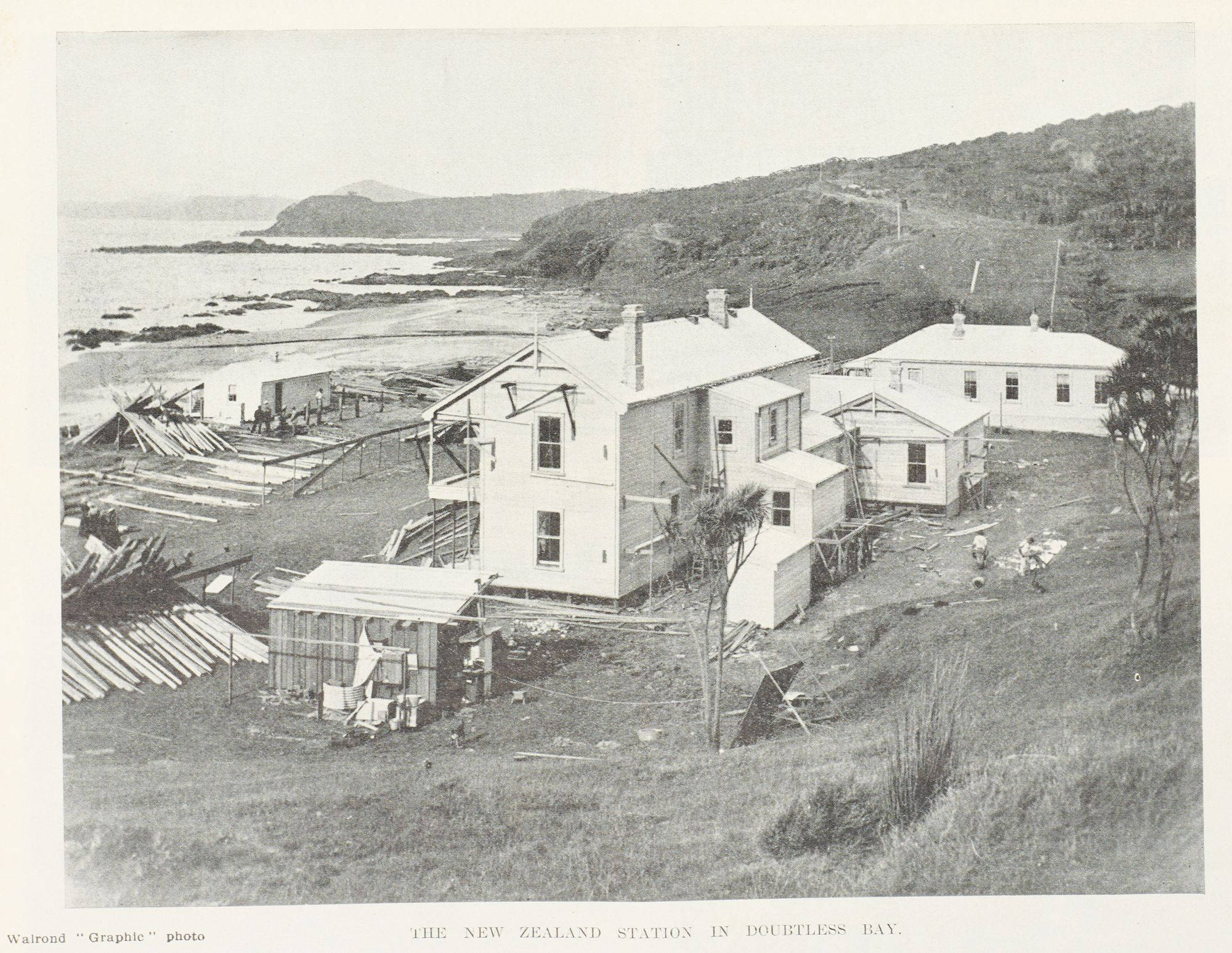
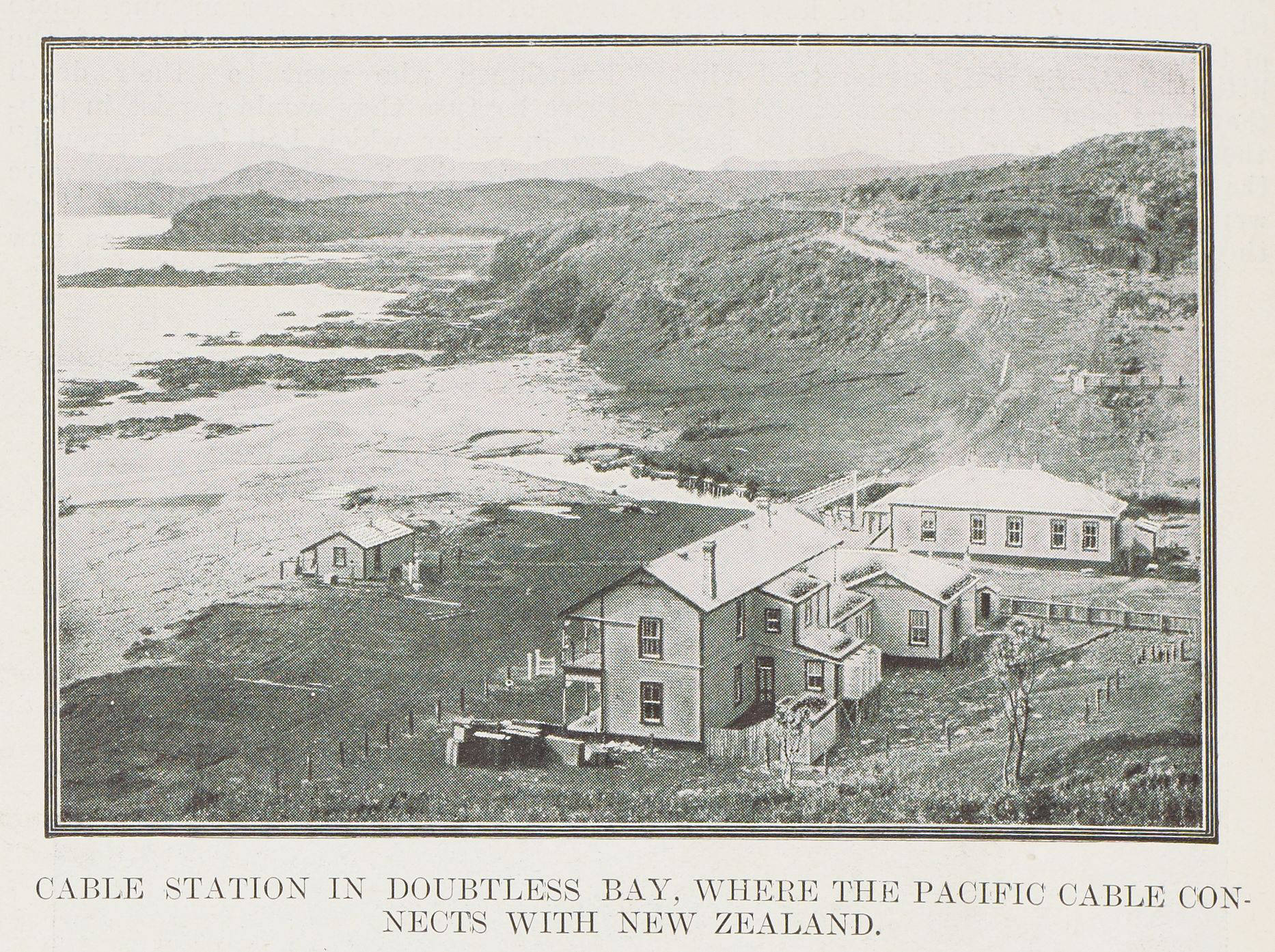
(Before) The New Zealand station in Doubtless Bay. The laying of the Pacific Cable Station. Source: Auckland Libraries Heritage Collections NZG-19020405-0641-02
(After) Cable station in Doubtless Bay, where the pacific cable connects with New Zealand. Source: Auckland Libraries Heritage Collections NZG-19080603-0022-02
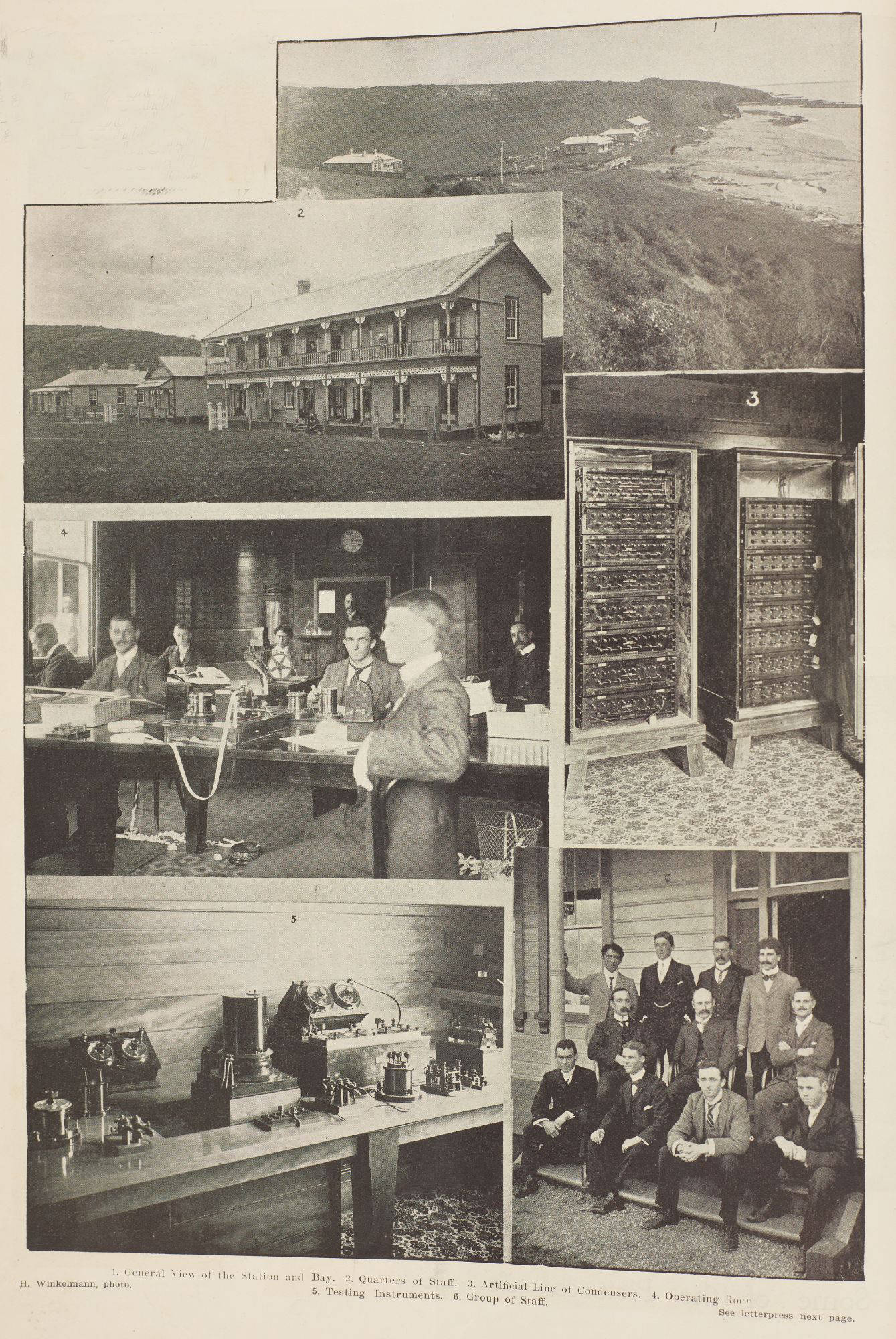
Six images of the Pacific Cable Station in Doubtless Bay. 1. General view of the station and bay. 2. Quarters of staff. 3. Artificial line of condensers. 4.Operating room. 5. Testing instruments. 6. Group of staff. Source: Auckland Libraries Heritage Collections NZG-19020705-0034-01
Preservation and Tourism
Today, the region’s history is preserved through the Mangōnui Heritage Trail, which features 19th-century landmarks like the Mangōnui Courthouse (1892) and the Mangōnui Hotel (1906).
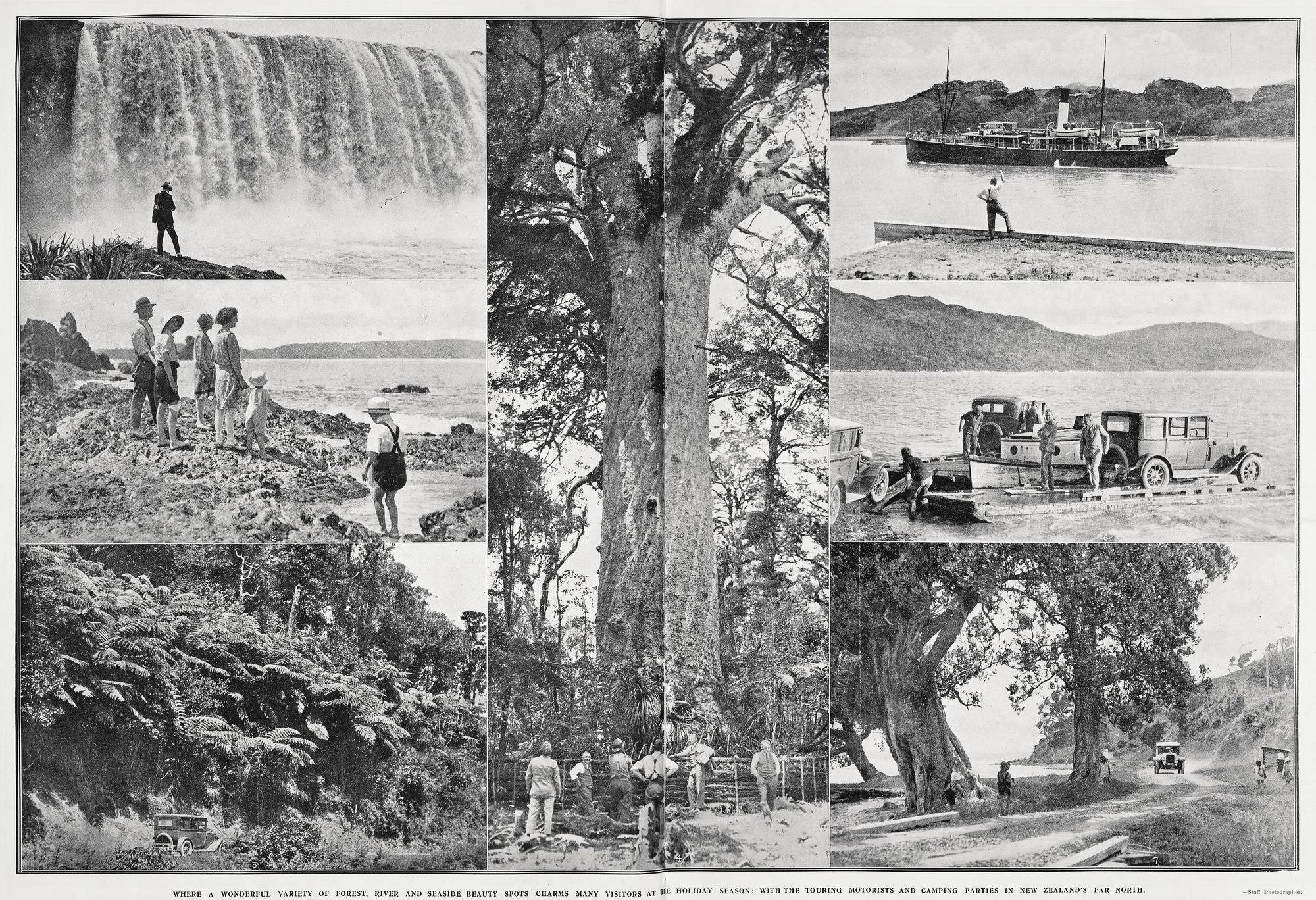
With the touring motorists and camping parties in New Zealand’s Far North. Top right. The coastal steamer Clansman departing from Mangonui, Doubtless Bay. Source: Auckland Libraries Heritage Collections AWNS-19300101-39-01
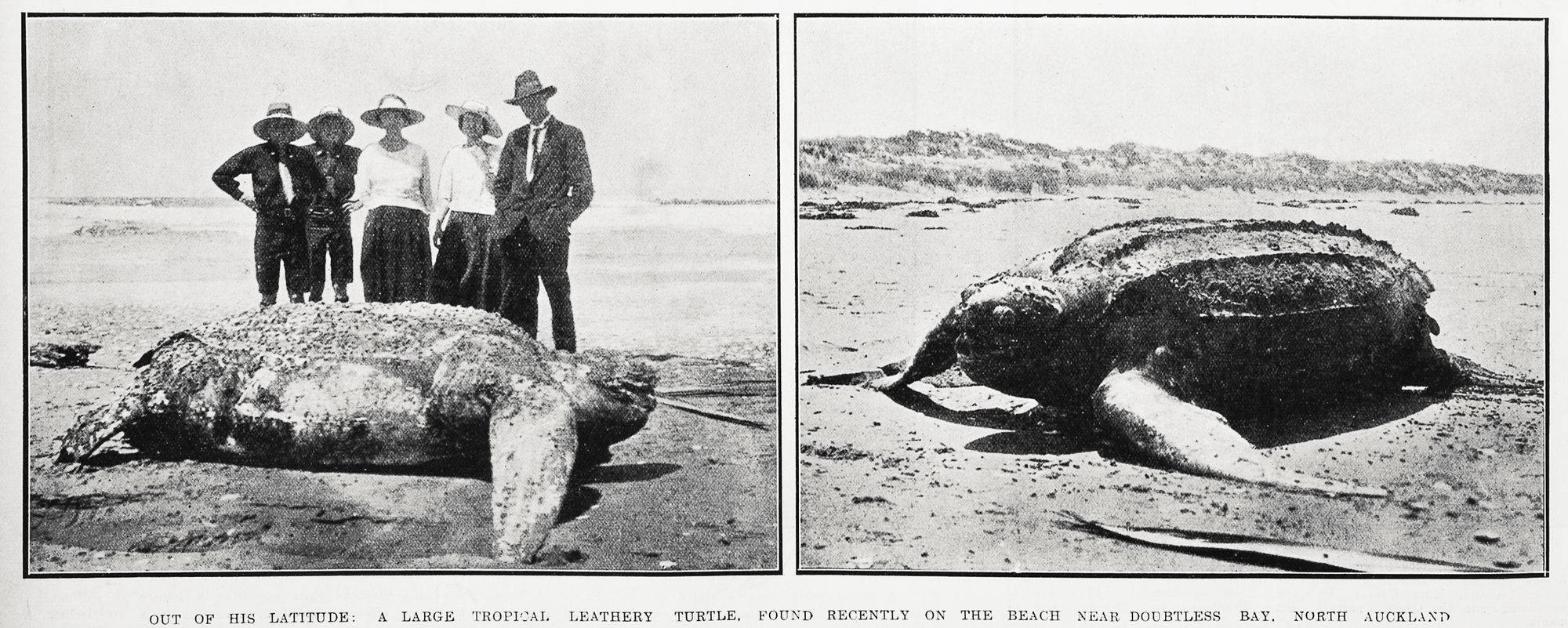
Out of his latitude: a large tropical leathery turtle. found recently on the beach near Doubtless Bay, North Auckland. Source: Auckland Libraries Heritage Collections AWNS-19240214-36-05
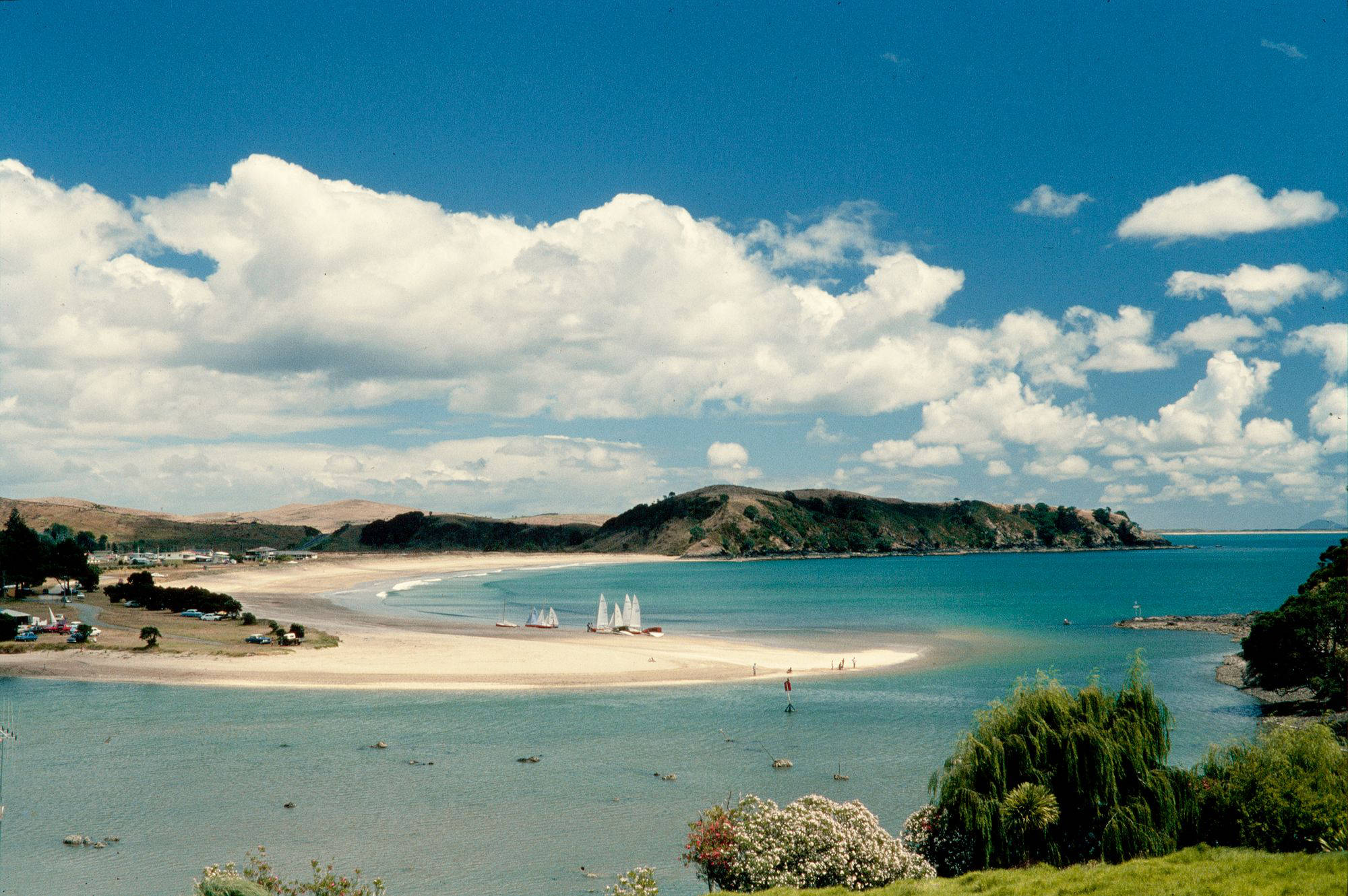
The Taipa Bay beach and estuary on Doubtless Bay, Northland. Picture taken of the bay around the period of 1980-1989. Source: Auckland Libraries Heritage Collections 1021-2044
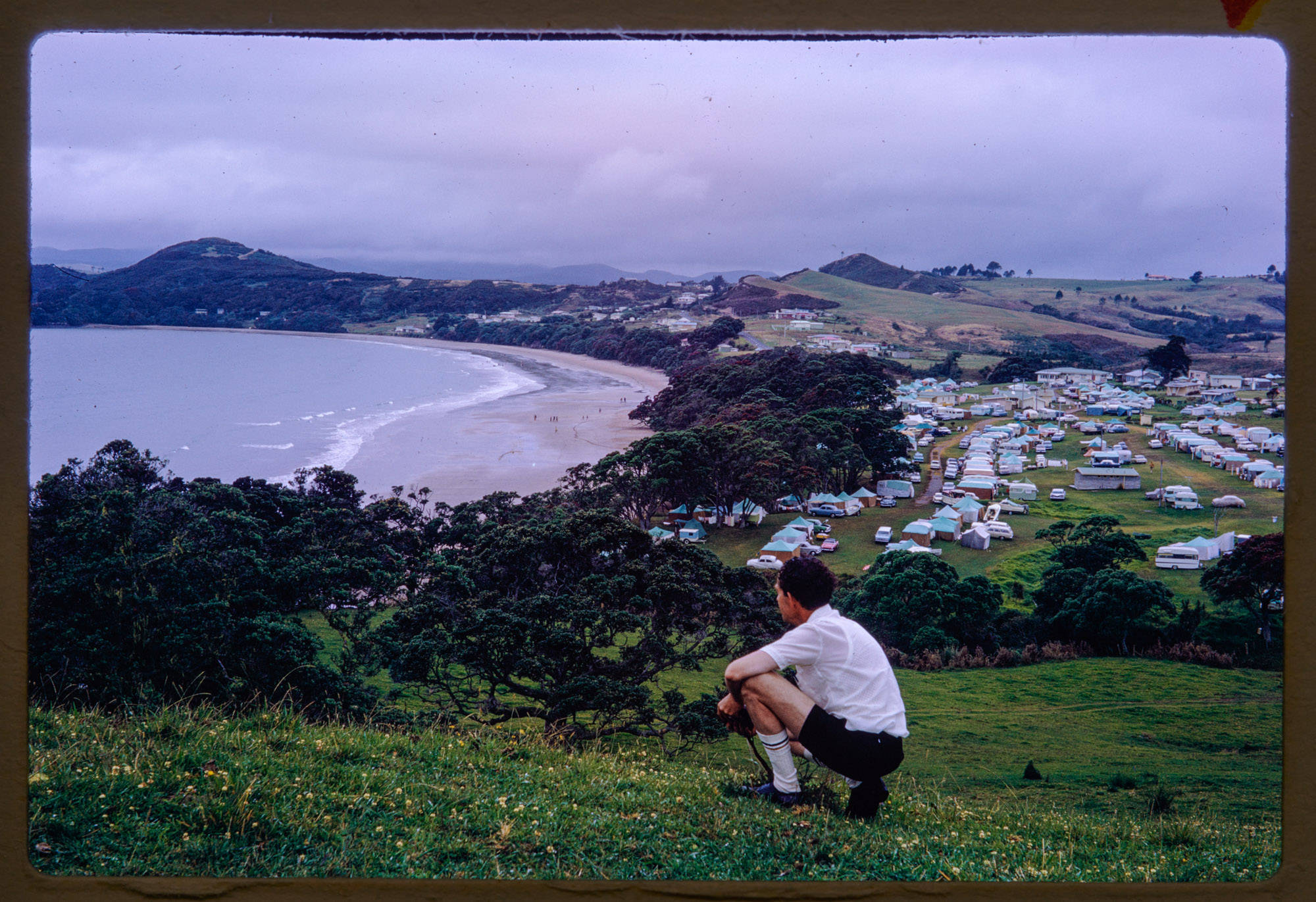
Keith Thomson kneeling on a hill above Coopers Beach, with Coopers Beach Motor Camp in the valley below. Source: Auckland Libraries Heritage Collections 1507-004-20
Citations:
1. Claudia Orange, Northland places – Mangōnui and district, Te Ara – the Encyclopedia of New Zealand, https://teara.govt.nz/en/northland-places/page-3 (accessed 5 May 2026).
2. Rangikapiti Pā, Department of Conservation, https://www.doc.govt.nz/parks-and-recreation/places-to-go/northland/places/mangonui-area/heritage-sites/rangikapiti-pa/(accessed 5 May 2026).
3. Doubtless Bay, Toitū Te Whenua – Land Information New Zealand. https://www.linz.govt.nz/our-work/new-zealand-geographic-board/place-name-stories/place-names-cooks-voyages/doubtless-bay (accessed 5 May 2026).
4.Trove Australia. http:/southseas.nla.gov.au/journals/cook/17691209.html (accessed 5 May 2026).
5. John Dunmore. ‘Surville, Jean François Marie de’, Dictionary of New Zealand Biography, first published in 1990, updated October 2023. Te Ara – the Encyclopedia of New Zealand, https://teara.govt.nz/en/biographies/1s28/surville-jean-francois-marie-de (accessed 5 May 2026).
6. Kidnapped Ngāti Kahu chief Ranginui dies on French ship, https://nzhistory.govt.nz/maori-kidnap-victim-dies-french-ship, (Manatū Taonga — Ministry for Culture and Heritage), updated 24-May-2024 (accessed 5 May 2026).
7. Mangōnui, Wikipedia. https://en.wikipedia.org/wiki/Mang%C5%8Dnui (accessed 5 May 2026).
Discover more about Doubtless Bay
Explore more of Doubtless Bay’s charm through its local heritage sites, cafés, galleries, and coastal walks. Experience the town’s rich history at every turn.